Arrow Infographics Templates Layout: Dynamic Visual Storytelling
In the world of presentations and visual storytelling, the impact of compelling visuals cannot be overstated. One such visual element that has gained immense popularity is the Arrow Infographic. Your game-changing ally. With arrow infographics, you can say goodbye to bland presentations and hello to dynamic, engaging storytelling. From comparisons to timelines, Arrow Infographics make data dance and information memorable. Whether you’re a professional presenter, a marketer, an educator, or simply someone looking to convey information effectively, Arrow Infographics can be your secret weapon. With Mighty Slide, explore the world of arrow Infographics as we highlight their types, uses, and importance to elevate website visuals, presentations, and whatnot!
What Exactly Are Arrow Infographics?
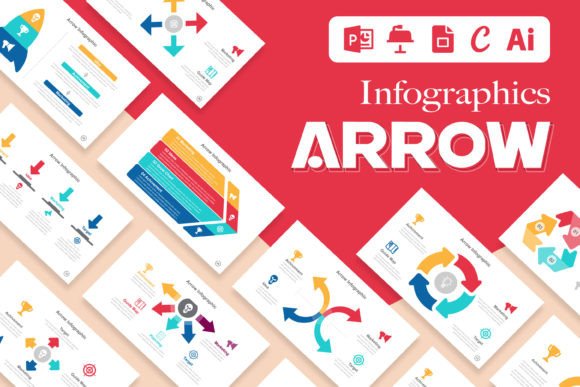
Think of an Arrow Infographic Template Layout not as a single font, but as a complete design system. It's a collection of pre-designed, editable slides and graphics built around the powerful visual metaphor of the arrow. This isn't just about drawing lines; it's about structuring information to guide the viewer's eye with purpose and clarity. The visual personality is inherently directional, progressive, and energetic. The style is clean and professional, yet bold enough to make a statement. Its appeal lies in its ability to transform complex processes, sequences, or comparisons into intuitive, easy-to-follow visual narratives.
The core components of these templates often include a curated font pairing—typically a strong sans serif font for headlines and a highly legible one for body text—alongside a library of arrow shapes, icons, and color schemes. This integrated approach ensures visual harmony, which is a cornerstone of effective modern typography and layout design. The result is a cohesive design asset that saves hours of work while guaranteeing a polished, professional outcome.
Where Arrow Infographics Shine: Real-World Applications
The versatility of Arrow Infographics is their greatest strength. They are not confined to one niche but excel across a spectrum of creative and commercial projects. For marketers and entrepreneurs, they are invaluable for creating compelling sales funnels, customer journey maps, and product comparison slides that drive conversions. The directional flow naturally leads the audience from problem to solution.
Educators and content creators find them perfect for breaking down complex topics into step-by-step guides, historical timelines, or cause-and-effect diagrams. In editorial design and publishing, arrow-based layouts can structure feature articles or infographics for magazines and blogs, enhancing reader engagement. For small business owners, they provide a quick way to create professional-looking training materials, business proposals, and internal reports that reinforce a competent brand identity.
Even in more creative realms like social media graphics, arrow templates help create carousel posts that tell a story slide-by-slide, or highlight key features in a product launch post. The templates from sources like Mighty Slide are designed for immediate use in PowerPoint, Google Slides, and Adobe Illustrator, making them accessible commercial font and graphic solutions for any project.
The Influence on Audience and Brand
Using a well-designed Arrow Infographic Layout does more than just organize information; it actively shapes perception. The consistent use of arrows and associated typeface choices establishes a clear visual hierarchy. Your most important data point or call to action sits at the arrow's head, naturally drawing focus. This clarity directly boosts readability and audience engagement, as viewers spend less time deciphering structure and more time absorbing your message.
From a branding perspective, these templates contribute to consistency. When every presentation, report, and social media graphic uses a cohesive visual language built around similar directional cues and a unified color palette, it strengthens brand recognition. A company that communicates with clarity and direction is perceived as organized, reliable, and forward-thinking—key components of professionalism. The templates become a part of your brand identity toolkit, ensuring every piece of communication aligns with your strategic narrative.
Practical Guidance for Implementation
Integrating Arrow Infographics effectively requires a thoughtful approach. First, evaluate the project fit. Ask yourself: Does my content involve a process, sequence, comparison, or journey? If yes, an arrow layout is likely a strong candidate. For purely abstract or emotional content, a different style might be more appropriate.
Next, choose your template with care. Look beyond the arrows. Examine the included font pairing. Is the sans serif font clean and modern? Does the body text have good x-height for readability on screen? A premium font inclusion often means better kerning and additional weights. Review the included styles—do you need horizontal, vertical, curved, or comparative arrows? Ensure the color scheme is adaptable to your brand palette.
Test the pairings and layouts. Don't just use the template as-is. Swap in your brand colors. Try pairing the template's font with another from your library to see if it creates a better font pairing. Use the arrows to highlight your key message, not just as decoration. For instance, use a bold arrow to point to a customer testimonial or a key statistic.
Finally, understand the commercial licensing. Most reputable sources like Mighty Slide offer templates with licenses that allow for broad commercial use, but it's always prudent to verify. This ensures your design assets are fully cleared for client work, advertising, and merchandise.
In essence, Arrow Infographics Templates Layouts are more than a passing trend. They are a fundamental tool in the visual communicator's arsenal, offering a structured yet flexible way to present information. By leveraging their inherent directionality and pairing them with thoughtful typography and strategy, you can elevate your visuals from mere slides to compelling stories that resonate, persuade, and are remembered.