Wellness Notion Dashboard & PLR Templates: A Designer's Guide
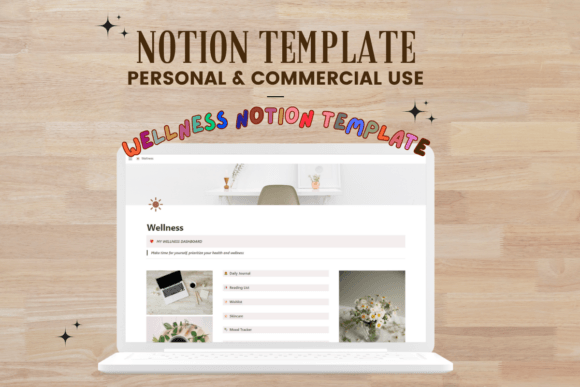
Let's talk about a specific kind of digital asset that’s become a quiet powerhouse for creators and small business owners: the Wellness Notion Dashboard. This isn't just a digital planner; it's a complete ecosystem for managing well-being, packaged as a set of PLR templates. For designers, marketers, and entrepreneurs, this presents a unique opportunity. You're not just buying a tool for personal use; you're acquiring a brandable template—a foundation you can reshape, style, and sell as part of your own product suite. Think of it less as a font and more as a design asset for the productivity and wellness space, with its own distinct visual personality and practical appeal.
The Visual Personality: More Than Just a Dashboard
The core appeal of a high-quality Wellness Notion Template lies in its curated aesthetic and structured personality. Visually, the best examples move beyond Notion's default look. They employ a consistent color palette—often soft, calming pastels or clean, energetic primaries—to create an immediate sense of harmony. The layout is intentional, using columns, callout blocks, and database views to establish a clear visual hierarchy. This isn't just about looking pretty; it's about readability. A well-designed dashboard guides the user's eye naturally from a daily habit tracker to a meditation log to a mood journal, reducing cognitive load and making the tool genuinely useful. The personality is one of calm control and thoughtful organization, which directly influences brand perception for anyone who adopts or resells it.
This structured approach has a parallel in modern typography. Just as a designer selects a serif font for authority or a script font for elegance, the creator of a Notion Dashboard for Health chooses specific elements to convey a feeling. The use of icons, the spacing between sections, and the style of the headings all work together like a typeface family with various weights and styles. The overall effect is a premium font equivalent in the template world: a cohesive, professional system that feels intentional and valuable. For a content creator or small business owner, this built-in professionalism is a significant advantage. It allows them to present a polished product without needing advanced design skills, directly impacting audience engagement by making the tool inviting and easy to use.
Strategic Applications for Creative Professionals
Understanding where this asset works best is key to leveraging its full potential. As a PLR Template, its applications extend far beyond personal wellness tracking. For the entrepreneur or marketer, the Wellness Notion Dashboard can be rebranded and sold as a digital product. You can customize the copy, adjust the color scheme to match your brand identity, and even bundle it with other resources. It’s an ideal product for a niche audience interested in self-improvement, productivity, or holistic health. The commercial font licensing analogy holds true here; you're acquiring rights to modify and distribute the template as your own creation, which is a powerful business model.
For the blogger or publisher, this template can serve as a lead magnet to grow an email list. Offering a beautifully designed, functional wellness planner is a high-value incentive that demonstrates your expertise. In editorial design terms, it's a standalone piece that complements your content. A content creator might use the template's structure to plan their own content calendar, integrating wellness breaks and mindfulness practices into their creative workflow. This practical application showcases the template's versatility. It’s not just a passive asset; it’s a tool that can streamline your own operations while also being a marketable product. The key is viewing it through the lens of packaging design—how you wrap, present, and position this asset determines its success in your specific market.
Practical Guidance for Implementation and Customization
So, how do you choose and implement a brandable template like this effectively? Start by evaluating the project fit. Does the template's inherent style align with your target audience? A minimalist, monochrome dashboard might appeal to a corporate wellness coach, while a vibrant, icon-rich version could be perfect for a fitness influencer. Test the template's functionality as rigorously as you would test font pairings. Use it yourself for a week. Is the navigation intuitive? Can you easily find the meditation tracker or the journaling section? This hands-on experience is invaluable for understanding its real-world value and for writing authentic sales copy later.
When customizing, focus on consistency. If you're rebranding it, ensure every element—from the header image to the database properties—reflects your visual language. This is where the principles of logo design and social media graphics come into play. Your customized dashboard should feel like a natural extension of your existing brand ecosystem. Consider the included styles and layouts. A robust Wellness Notion Template will offer multiple views and configurations, giving you flexibility in how you present the final product. Finally, pay close attention to the licensing terms of the PLR Templates. Understanding what modifications are required and how you can distribute the final product is crucial for a smooth and legal rollout. This asset is a canvas; your strategic design and marketing decisions will transform it from a generic tool into a signature product that enhances your brand's authority and serves your community.